Heavy Duty Towing Highway 20
Heavy Duty Towing Highway 20
Heavy duty breakdowns along Highway 20 are never minor events—they are serious roadway incidents that require immediate, professional intervention.
At Central Iowa Towing & Recovery, we understand how disruptive and hazardous it can be when a semi-truck, construction vehicle, RV, or fully loaded commercial rig becomes disabled along one of northern Iowa’s most heavily traveled freight routes. Highway 20 serves as a vital east–west corridor moving traffic through Webster City, supporting agricultural operations, regional logistics fleets, manufacturing suppliers, and long-haul drivers moving goods across the state.
Our team is strategically positioned to respond quickly to Highway 20 incidents near Webster City, reducing lane closures and minimizing the risk of secondary accidents while protecting drivers, cargo, and passing motorists. We never treat heavy-duty towing as a generic service. Every call requires careful planning, load evaluation, traffic control coordination, and specialized recovery techniques. From jackknifed semis near rural access points to overheated dump trucks stuck on the shoulder, we approach each situation with methodical precision and strong local knowledge.
This article explains why Webster City area drivers rely on us for heavy duty towing on Highway 20, how our services work, the equipment we use, and what you can expect when you call 515-290-4188 for immediate assistance.
Why Webster City Drivers Rely on Us for Heavy Duty Towing Highway 20
Drivers traveling along Highway 20 near Webster City face risks that go well beyond routine roadside issues. This stretch of highway supports constant agricultural transport, oversized loads, and long-distance freight traffic that demand towing professionals with true heavy-duty expertise. At Central Iowa Towing & Recovery, our reputation is built on safely and efficiently handling these exact conditions.
Because we regularly provide towing services in and around Webster City, our dispatchers and operators understand the area’s traffic flow, enforcement patterns, and safe locations to stage large-scale recoveries. Whether a breakdown occurs near a local access road or on a more isolated rural stretch of Highway 20, we are prepared to respond without unnecessary delay.
Drivers trust us because we focus on:
- Safety-first recovery planning, including traffic management and compliance with Iowa’s Slow Down, Move Over law
- Experience with weight-rated recoveries, including loaded trailers, multi-axle vehicles, and off-shoulder extractions
- Clear, consistent communication, so drivers know what to expect at every stage
- Local familiarity, allowing us to anticipate narrow shoulders, soft ground, and weather-related hazards
Many heavy-duty calls in the Webster City area occur during early morning or overnight hours, when visibility is limited and driver fatigue increases risk. Our night-shift operators are trained to secure scenes quickly using proper lighting, reflective barriers, and controlled positioning. That dependability is why fleet managers, owner-operators, and commercial drivers continue to rely on our team when Highway 20 problems arise.
Our Heavy Duty Towing Highway 20 Services
Heavy-duty towing along Highway 20 requires a customized approach for every call. Vehicle type, load weight, roadway position, and environmental conditions all influence how a recovery should be handled. At Central Iowa Towing & Recovery, we provide comprehensive heavy-duty towing solutions specifically tailored to the Webster City and Highway 20 corridor.
Our services include:
- Semi-truck towing and recovery, including tractor-trailers, box trucks, and day cabs
- Loaded and unloaded trailer towing, with careful load stabilization
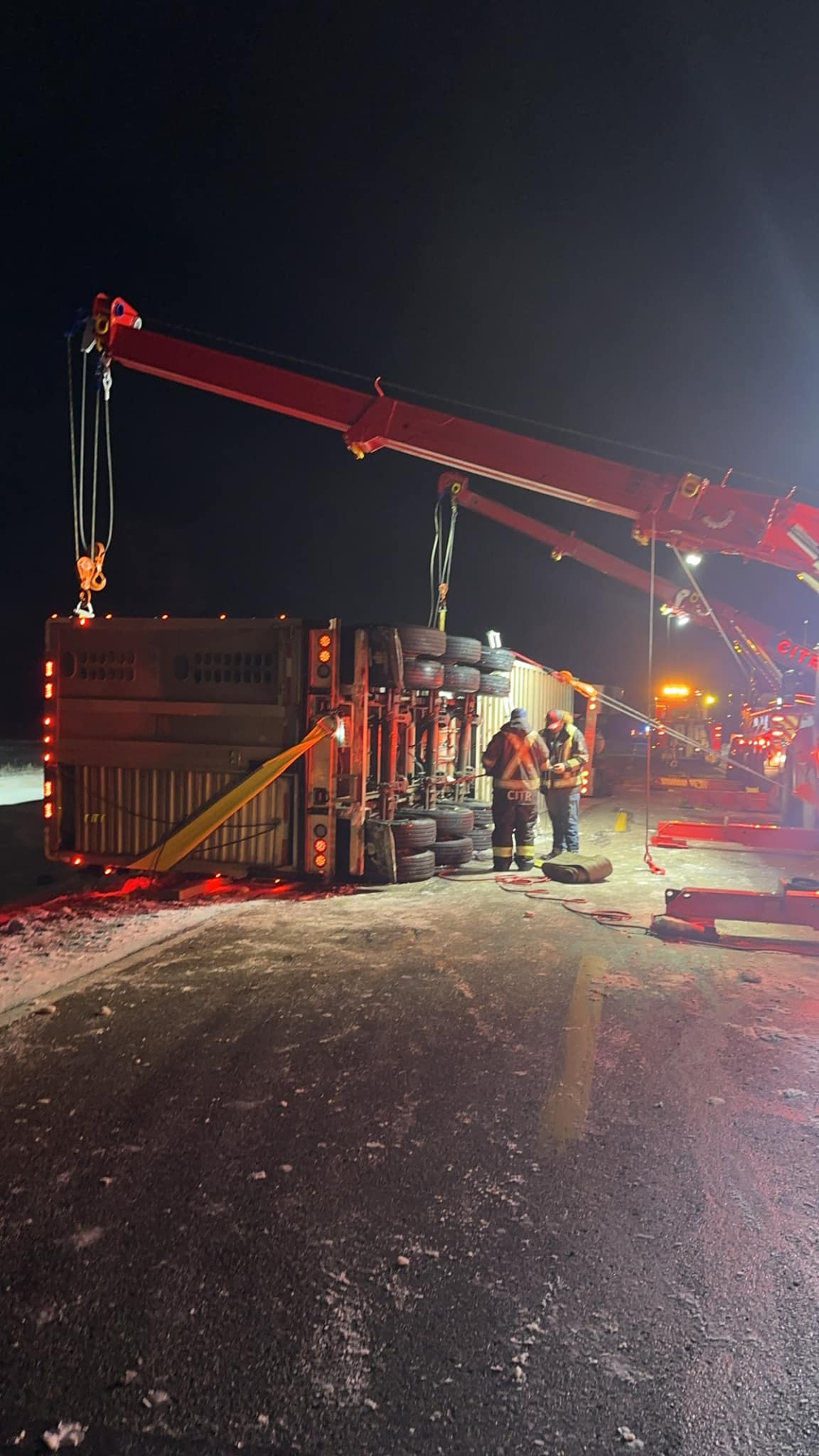
- Rollover recovery, using controlled and calculated uprighting methods
- Heavy equipment transport, including agricultural and construction machinery
- Winch-outs and off-road recoveries, common during winter snow drifts or muddy shoulders
We frequently assist vehicles disabled near intersections, rest pull-offs, and work zones. The speed and volume of Highway 20 traffic require precise coordination to reduce disruption and prevent secondary collisions. Before proceeding, our operators evaluate whether on-site adjustments, load transfers, or full towing is the safest course of action.
Weather heavily influences our recovery methods. Winter ice and reduced traction demand slower, deliberate techniques, while summer heat increases the likelihood of brake failures and engine overheating—especially for heavily loaded trucks. We adapt every response to current conditions to ensure safe, controlled outcomes year-round.
Equipment and Safety Measures We Use
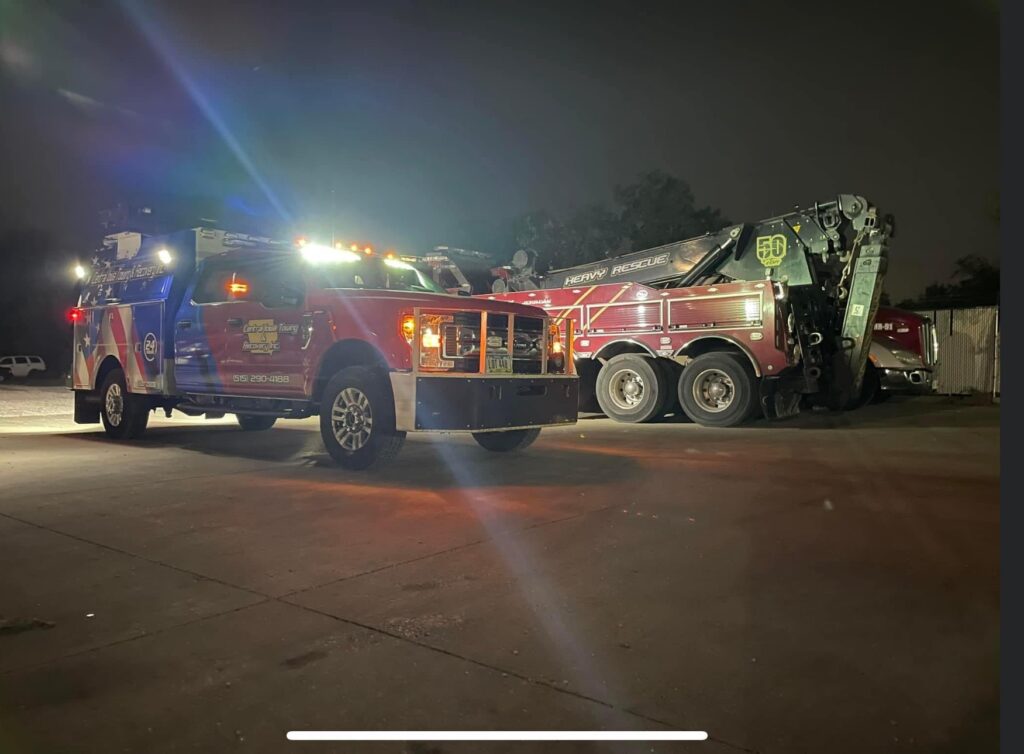
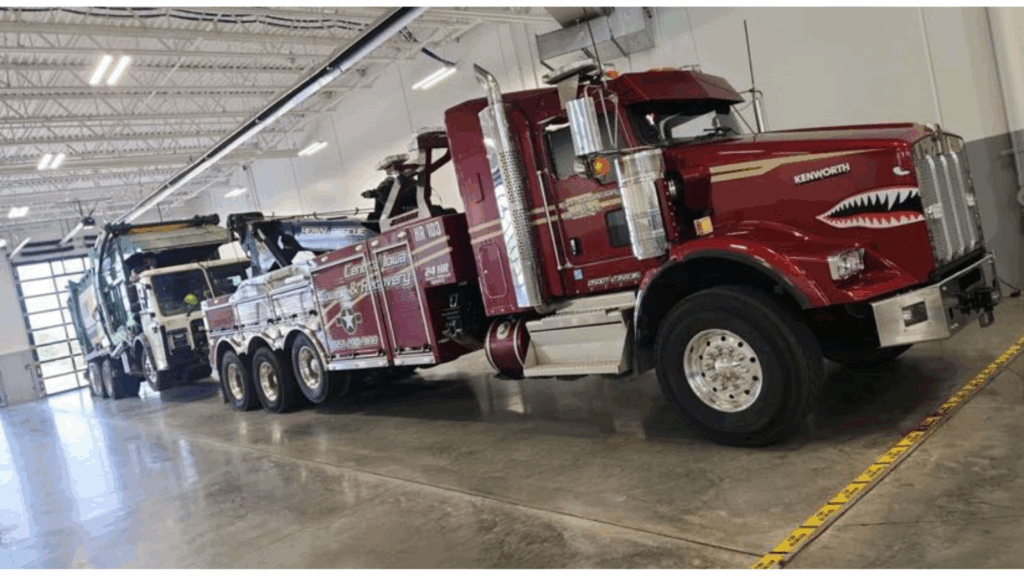
Effective heavy-duty towing depends on having the right equipment and using it correctly. Our fleet is purpose-built to handle the extreme weights and complex recovery scenarios common along Highway 20 near Webster City. Each dispatched unit is carefully matched to the specific demands of the situation.
Our equipment includes:
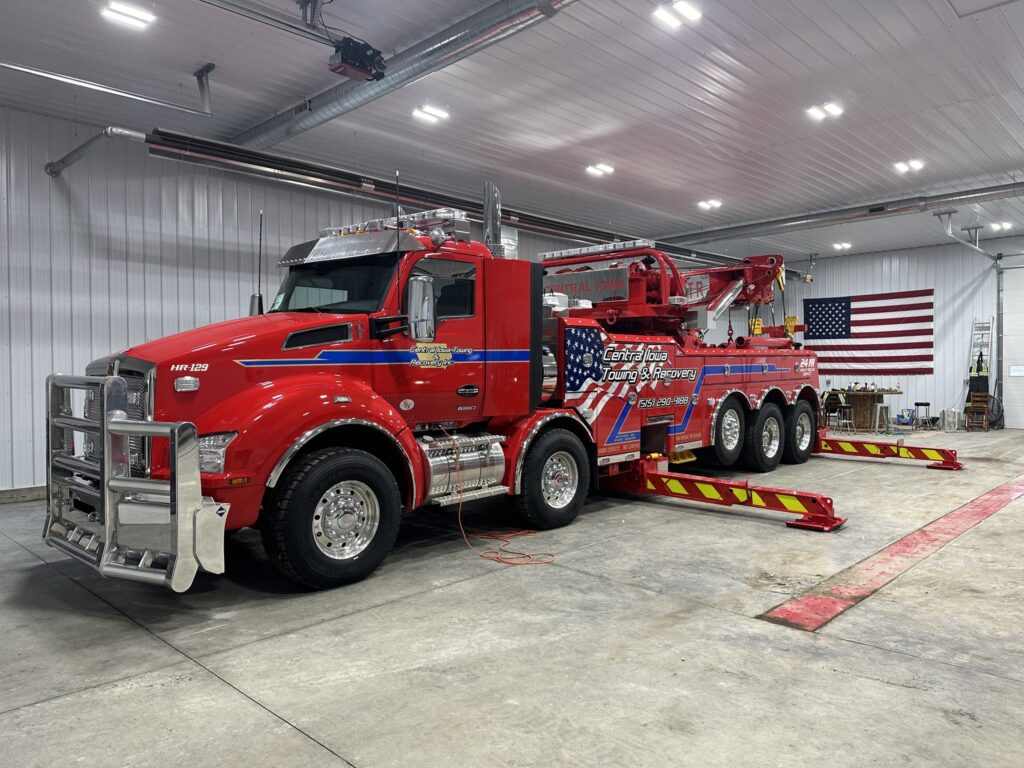
- Heavy-duty rotator wreckers for complex recoveries and rollovers
- High-capacity straight boom trucks for long-distance towing
- Air cushion recovery systems when sensitive uprighting is required
- Industrial-grade winches and rigging, rated for commercial loads
- Advanced lighting and traffic control equipment for night and low-visibility operations
Strict safety protocols guide every recovery. Before any movement begins, our operators conduct a full scene assessment that accounts for traffic flow, vehicle stability, load condition, and weather. Equipment placement is planned to maintain clear escape paths and minimize time spent on active roadways.
Compliance with Iowa safety regulations is mandatory. We use proper spacing, signage, and lighting to protect stranded drivers, our operators, and passing motorists throughout the recovery process.
Rapid Response
Times
24/7 Emergency Service
Safety-First
Handling
What Happens When You Call Central Iowa Towing & Recovery
When you call 515-290-4188 for heavy duty towing on Highway 20, our response begins immediately. Our dispatch team gathers critical details such as vehicle type, load weight, exact location, and current roadway conditions. This allows us to send the correct equipment on the first response, saving time and reducing risk.
Once dispatched, our operator stays in communication while en route, providing arrival updates and initial safety guidance. Upon arrival, the priority is scene stabilization—positioning equipment, activating warning systems, and securing the disabled vehicle before recovery work starts.
The recovery process follows a structured approach:
- Vehicle and load assessment
- Selection of the safest recovery method
- Controlled execution with continuous safety checks
- Post-recovery inspection and secure transport
Drivers are kept informed throughout the operation so there are no surprises. Transparency and professionalism are especially important during high-stress roadside emergencies.
A Hwy 20 Incident We Responded To
On a cold winter night, a fully loaded grain hauler experienced brake issues while traveling eastbound on Highway 20 near Webster City. Snow accumulation and reduced visibility made it unsafe for the driver to continue, and the trailer began drifting toward a shallow ditch along the shoulder.
Our team responded quickly with a heavy-duty wrecker equipped for icy conditions. After securing the scene and managing traffic exposure, we stabilized the trailer and performed a controlled winch-out to prevent a rollover. The vehicle was then safely towed to a nearby service location without cargo loss.
The driver later shared that clear communication and calm execution made a stressful situation far more manageable—exactly the outcome we aim for on every call.
Emergency Tips to Stay Safe While You Wait
PULL OVER SAFELY
Pull over as far as safely possible from traffic, especially along Highway 141.
USE HAZARD LIGHTS
Turn on your hazard lights and, if safe, place reflective triangles or flares behind your vehicle.
STAY SECURE
Stay inside your vehicle if stranded on a busy road; if on a quiet street, wait in a safe, well-lit area.
RUN THE ENGINE
If temperatures are freezing, run the engine periodically for heat — but ensure the tailpipe is clear of snow.
Typical Response Times for Heavy Duty Towing Hwy 20
Because we operate from our Webster City and Ames dispatch locations, we are often able to reach Highway 20 incidents faster than out-of-area providers.
Typical estimated arrival times range from 30 to 45 minutes, depending on traffic, weather, and time of day.
Factors that can affect response time include:
- Distance from nearby access points
- Weather conditions such as snow, fog, or ice
- Current traffic volume and road work
Our dispatchers provide realistic time estimates and keep you updated if conditions change.


FAQ: Heavy Duty Towing Highway 20
Costs depend on vehicle weight, recovery complexity, distance, and time required. We explain the process clearly before work begins.
The 80/20 rule means a tow truck should operate at no more than 80% of its rated capacity. This safety buffer helps manage shifting loads, road conditions, and braking demands common on Highway 20.
Towing costs on Highway 20 depend on vehicle weight, distance, and recovery complexity. Heavy-duty tows cost more due to specialized equipment, trained operators, and added safety requirements.
Yes. Our equipment is rated to safely handle loaded tractor-trailers.
Call immediately and explain your situation. In some cases, a vehicle can be moved to a safer nearby location or towed a shorter distance to reduce cost. Leaving a vehicle on Highway 20 can lead to higher expenses.
Yes. We provide 24/7 heavy duty towing in Webster City and along Highway 20.
No. For safety reasons, drivers are not allowed to remain inside the vehicle during towing or recovery operations.
We perform controlled winch-outs designed to prevent rollovers or cargo damage.
Yes. Our team is trained and equipped for icy and low-visibility conditions.
Trustindex verifies that the original source of the review is Google. Rob was so helpful and supportive and patient on the phone. Tyrone was so positive and upbeat at 6am on a Saturday. He was quick and responsive to coming out and to my questions and getting me information. Highly recommend them if you need a tow.Trustindex verifies that the original source of the review is Google. Thank you !!!Trustindex verifies that the original source of the review is Google. Very impressed with this company. They did what we asked of them in a timely manner and quoted us a fair price. We recommend.Trustindex verifies that the original source of the review is Google. Josh was quick and super nice, he came and picked up my vehicle and had it delivered in less than 45 minutes. Easy service and highly recommended. Thank you so much!!Trustindex verifies that the original source of the review is Google. Josh and the woman on the phone both fantastic!! Very accommodating and helpful, always recommend them!!Trustindex verifies that the original source of the review is Google. Called these guys last minute to move 9 scissor lifts. Was a little nervous at first. The guys showed up knew exactly what they were doing got them all transported no issues. Couldn't have been happier with the work. Will definitely continue using them. Great job guys!Trustindex verifies that the original source of the review is Google. Excellent service! I have used them multiple times. I decided to use another local company for some foolish reason. I scheduled a week out. The other company canceled the morning of pickup. I then called Central Iowa Towing. They came to the rescue once again… in less than an hour! Never again will I Go elsewhere. You folks are very clutch when people need you. Thank you!!Trustindex verifies that the original source of the review is Google. Always on top of it and made sure my scheduled tows were there on timeVerified by TrustindexTrustindex verified badge is the Universal Symbol of Trust. Only the greatest companies can get the verified badge who has a review score above 4.5, based on customer reviews over the past 12 months. Read more
Mobile Mechanic Services available for Des Moines, Ames, Marshalltown, Webster City and all of Central Iowa
to help you with your Mobile Car Services, Semi BreakDowns and any other Mobile Mechanical Services you may
need for cars, trucks, semi trucks… etc call our main dispatch number 24/7 for emergency roadside assistance.
Vehicle Lockouts, Gas or Fuel Delivery if you have “Ran out of Gas“, Help With a Tire Change, Mobile Flat Tire Assistance.






Ames Location:
Phone: 515-290-4188Des Moines Location:
Phone: 515-290-4188Marshalltown Location:
Phone: 515-290-4188Call Central Iowa Towing & Recovery Now for 24/7 Heavy Duty Towing Highway 20
If you’re dealing with a heavy-duty breakdown or recovery situation on Highway 20 near Webster City, don’t wait. Call Central Iowa Towing & Recovery at 515-290-4188 for professional, safety-focused heavy duty towing available 24 hours a day. Our team is ready to respond when it matters most.