Towing Gilbert IA – Fast, Professional Help
Click to Call
515-290-4188
When drivers in and around Gilbert encounter an unexpected breakdown, accident, or roadside emergency, getting reliable towing assistance quickly becomes the top priority. Rural highways, farm roads, and commuter routes connecting Gilbert to nearby Ames can present unique challenges, especially during Iowa’s harsh winters or summer heat. At Central Iowa Towing & Recovery, we provide dependable, professional towing Gilbert IA drivers can rely on day or night, backed by our broader expertise in reliable towing services in Ames to ensure fast response across the entire region.
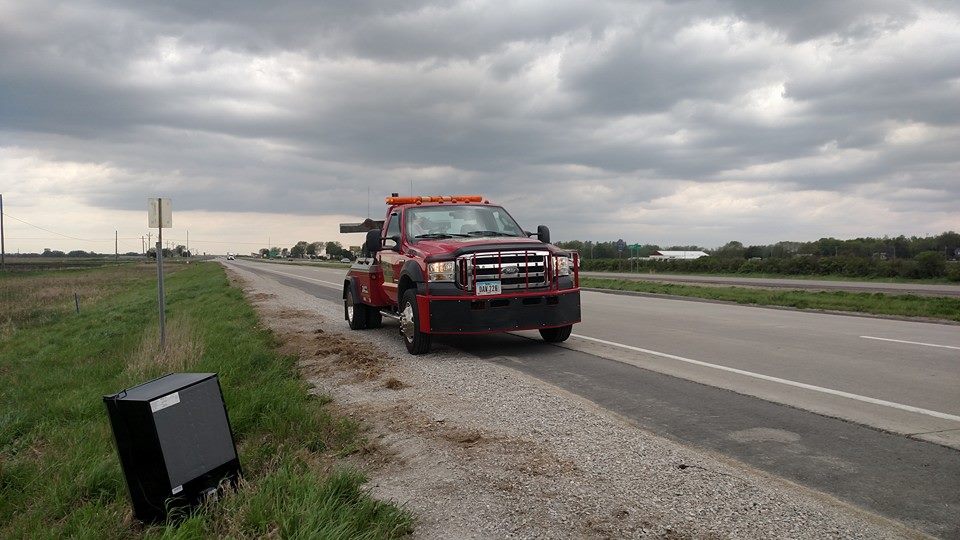
Our team operates from 2019 E Lincoln Way in Ames, positioning us close enough to reach Gilbert quickly through primary routes like U.S. Route 69 and nearby connectors feeding into Interstate 35. Whether you’re dealing with a dead battery in a neighborhood driveway, a collision on a rural gravel road, or a stalled vehicle during rush hour near the Gilbert school district, we dispatch experienced operators with the right equipment to resolve the problem safely. Towing services are not simply about moving a vehicle. They are about protecting motorists, reducing roadway hazards, and helping people regain control of stressful situations, just as we do for drivers needing professional towing support in Nevada IA and surrounding communities. At Central Iowa Towing & Recovery, our approach prioritizes safety procedures, vehicle protection, and efficient response times. Every call we receive is treated as urgent because we understand that when drivers are stranded, they need help they can trust. Drivers throughout Gilbert rely on our 24/7 dispatch line at 515-290-4188 to send a professional tow operator who understands local roads, weather conditions, and the safest way to recover vehicles from difficult situations.
Why Gilbert Drivers Depend on Central Iowa Towing & Recovery for Emergency Towing
Several factors make our towing service especially valuable for Gilbert motorists:
- Local route familiarity: Our operators know how to navigate farm access roads, gravel shoulders, and residential streets without causing damage to property or vehicles.
- Fast regional dispatch: Being based in Ames allows us to reach Gilbert quickly using direct routes instead of distant highway approaches.
- Weather-ready response: Iowa weather shifts quickly, from icy winter mornings to severe thunderstorms in summer. Our fleet is equipped to handle recovery in snow, mud, and flooded shoulders.
- Safety-focused roadside procedures: Our operators follow best practices that align with Iowa’s “Slow Down, Move Over” traffic safety expectations to protect both motorists and roadside workers.
The community-oriented nature of Gilbert also means many of our calls involve helping neighbors, families, and commuters who travel the same roads daily. When someone breaks down near a school zone or a rural intersection after dark, a prompt and professional response can prevent further accidents. Our dispatch team tracks patterns in roadside incidents throughout the region. For example, early morning hours between 5:30 AM and 8:30 AM tend to generate the highest volume of breakdown calls along commuter routes leading into Ames. Evening calls often involve flat tires or overheating vehicles during return commutes. This familiarity with regional traffic trends allows Central Iowa Towing & Recovery to position equipment strategically so we can respond quickly whenever Gilbert drivers need assistance, including those traveling toward Story City IA towing coverage areas.
Understanding the Towing Services We Provide in Gilbert, Iowa
Breakdowns in small communities often occur in locations that require special handling. Rural driveways, soft gravel shoulders, and farm access roads can complicate standard towing operations. Our operators evaluate each situation before choosing the safest recovery method. Our core towing and roadside services include:
- Emergency vehicle towing for breakdowns, collisions, or disabled vehicles
- Flatbed towing for luxury cars, all-wheel-drive vehicles, and low-clearance models
- Light-duty recovery for vehicles stuck in mud, snowbanks, or roadside ditches
- Accident scene towing coordinated with local law enforcement when necessary
- Long-distance vehicle transport between Gilbert, Ames, and surrounding communities
- Roadside assistance including jump starts, lockout service, and tire changes
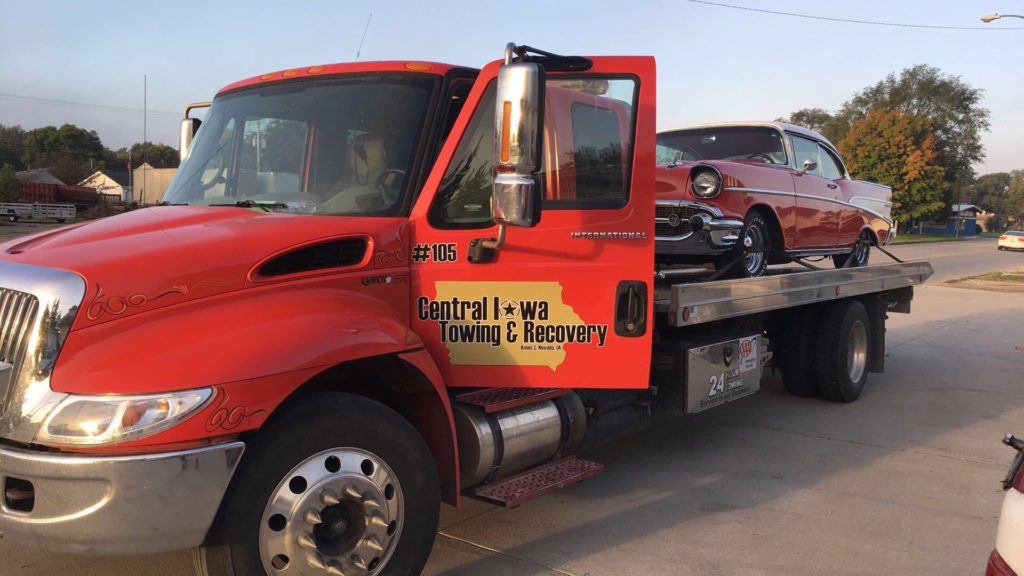
Equipment and Safety Procedures That Protect Your Vehicle
Key equipment used during our towing operations includes:
- Hydraulic flatbed carriers for secure, damage-free vehicle transport
- Wheel-lift towing systems for quick roadside removal in tight spaces
- Heavy-duty winches for ditch recovery or vehicles stuck in snow
- Soft straps and axle hooks designed to protect suspension components
- LED safety lighting for nighttime roadside visibility
Safety remains the top priority during every call. Roadside work can be dangerous, particularly along high-speed highways or during poor weather conditions. Our team takes several precautions before beginning any tow:
- Positioning trucks strategically to create a protective buffer from traffic
- Activating emergency lighting to alert approaching drivers
- Assessing the roadway for hazards such as ice, standing water, or loose gravel
- Guiding motorists to stand at a safe distance from the tow operation
What Happens When You Call for Towing in Gilbert
When drivers call Central Iowa Towing & Recovery for help, our dispatch process is designed to move quickly while collecting the information necessary to respond safely. Roadside emergencies can be stressful, especially if a driver is stranded in unfamiliar surroundings or during severe weather. Our dispatchers guide callers through a simple process to determine the exact assistance required. The typical dispatch sequence works as follows:
- Initial call assessment
The dispatcher asks key questions about the vehicle, location, and situation. This includes identifying landmarks, road names, or nearby intersections in Gilbert.
- Location verification
Precise location details help our team route the closest available tow truck. Rural areas sometimes have limited signage, so landmarks such as schools, grain elevators, or nearby roads can help confirm positioning.
- Service determination
Depending on the situation, dispatch will assign either roadside assistance or a full tow truck.
- Safety instructions
If the vehicle is stopped on a busy road, callers may be advised to:
- Move the vehicle off the roadway if possible
- Turn on hazard lights
- Stand away from traffic until the tow operator arrives
- Truck dispatch
Once details are confirmed, the nearest available operator is dispatched to the location.
A Winter Night Breakdown Outside Gilbert: A Local Customer Story
One February evening, shortly after sunset, our dispatch center received a call from a driver stranded on a rural road just outside Gilbert. Temperatures had dropped well below freezing, and light snow was beginning to accumulate along the roadside. The driver had been traveling toward Ames after leaving a family gathering in Gilbert when the vehicle suddenly lost power. The car rolled onto the gravel shoulder near a farm entrance, leaving the driver unsure whether the issue was mechanical or related to the cold weather. After confirming the driver’s location near a connecting road between Gilbert and Ames, our dispatcher sent a flatbed tow truck from our Ames location. The operator arrived and quickly identified the problem. The extreme cold had drained the vehicle’s battery, and the engine would not restart. Because the shoulder was icy and narrow, the operator determined that towing the vehicle was safer than attempting a roadside jump start in that location. Steps taken during the recovery included:
- Positioning the tow truck with safety lighting to warn approaching traffic
- Guiding the driver to stand a safe distance from the road
- Carefully winching the vehicle onto the flatbed to avoid sliding on the icy surface
- Transporting the vehicle to a repair facility in Ames for battery replacement
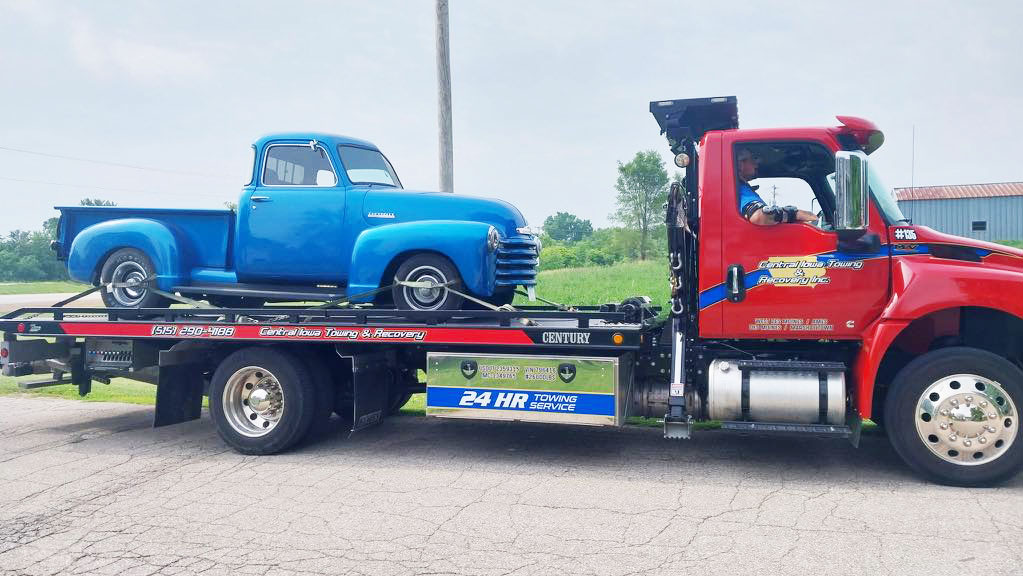
How Long Does Towing Usually Take in the Gilbert Area?
Typical response routes include:
- East Lincoln Way corridor connecting our dispatch base to northern rural roads
- Direct travel along U.S. Route 69 toward Gilbert
- Quick access to Interstate 35 when vehicles break down along the highway
Under normal conditions, many Gilbert towing calls fall within these estimated response windows:
- 15–25 minutes: Central Gilbert neighborhoods
- 20–30 minutes: Rural roads north or west of town
- 25–40 minutes: Interstate breakdowns requiring additional safety coordination
Pinned Roadside Safety Tips Every Gilbert Driver Should Know
Move the vehicle if possible
If the car can still roll, attempt to move it onto a shoulder, parking area, or side road to avoid blocking traffic.
Activate hazard lights immediately
Hazard lights alert approaching drivers that your vehicle is disabled.
Stay visible at night
If you carry emergency reflectors or warning triangles, place them several yards behind the vehicle to provide additional warning to approaching traffic.
Exit the vehicle carefully
Standing on the traffic side of a disabled vehicle can be dangerous. When possible:
- Exit the vehicle from the passenger side
- Move well away from the roadway
- Stand behind guardrails or on elevated ground
Avoid attempting dangerous roadside repairs
Changing a tire on a narrow highway shoulder or during severe weather can expose motorists to traffic hazards.
Follow “Slow Down, Move Over” awareness
Tow operators and emergency responders rely on drivers to reduce speed and move into adjacent lanes when possible.
Iowa Towing Laws and Roadside Responsibilities Drivers Should Understand
Understanding local towing regulations and driver responsibilities can help motorists navigate roadside incidents more confidently. Iowa law outlines several rules designed to protect both drivers and towing professionals during emergency situations. One of the most important traffic safety regulations affecting towing operations is the Move Over or Slow Down law. When approaching vehicles displaying flashing lights—such as tow trucks, police vehicles, or ambulances—drivers must take the following actions whenever possible:
- Move into the adjacent lane away from the stopped vehicle
- Reduce speed if changing lanes is not possible
- Remain alert for roadside workers and disabled vehicles
This law exists because roadside environments are inherently dangerous. Passing traffic often travels at highway speeds, and tow operators may be working only a few feet from moving vehicles. Additional considerations for motorists include:
Abandoned vehicle rules
Vehicles left unattended along highways may be removed by authorized towing companies after a specific time period, particularly if they create safety hazards.
Accident scene towing
Law enforcement officers may request a tow if a vehicle cannot be safely driven away from an accident site.
Property protection during towing
Professional towing companies must take reasonable precautions to prevent vehicle damage during loading, transport, and unloading.
Towing Unusual Vehicles Around Gilbert: More Than Just Standard Cars
Examples of specialty vehicles we frequently tow include:
- Hybrid and electric vehicles requiring flatbed transport
- Lifted pickup trucks with oversized tires and suspension modifications
- Moving trucks and cargo vans used by students relocating near Ames
- Utility trailers used for landscaping or construction work
- Small agricultural vehicles traveling between farms and rural properties
Electric and hybrid vehicles are becoming increasingly common around Ames due to university research initiatives and environmentally conscious drivers. These vehicles must often be transported on flatbeds to protect sensitive drivetrain components. Lifted trucks also present unique challenges. Their increased height can complicate standard wheel-lift towing, so operators may need extended equipment to ensure proper alignment and secure transport. Another growing trend involves electric bicycles and small personal mobility vehicles used by college students. While these items may not require traditional towing, our team occasionally assists with transporting damaged units after accidents. By maintaining versatile equipment and training, Central Iowa Towing & Recovery can safely handle the wide range of vehicles traveling through the Gilbert area.
Frequently Asked Questions
Because Central Iowa Towing & Recovery operates from nearby Ames, many calls in Gilbert can be reached within approximately 15–30 minutes depending on location and traffic conditions. Rural roads or severe weather may extend travel time slightly, but dispatch always sends the closest available operator to minimize delays.
First, activate your hazard lights and move the vehicle off the road if possible. If the area lacks a wide shoulder, remain inside the vehicle with seatbelts fastened until traffic clears or a safe exit point is available. Contact a towing service immediately and provide landmarks or road names to help identify your location.
Yes. All-wheel-drive and four-wheel-drive vehicles are typically transported using flatbed tow trucks to prevent drivetrain damage. Professional operators will evaluate the vehicle before loading it to ensure proper towing procedures are followed.
Yes. Professional towing companies frequently respond during winter storms because icy conditions increase the likelihood of breakdowns and vehicles sliding into ditches. However, severe weather may affect travel speeds and response times for safety reasons.
Yes. Roadside assistance focuses on resolving minor problems without moving the vehicle. This may include jump-starting a dead battery, changing a flat tire, or unlocking a vehicle. If the problem cannot be resolved safely on the roadside, the vehicle will then be towed to a repair location.
The Move Over law protects tow operators, emergency responders, and stranded drivers. When motorists slow down or change lanes near vehicles with flashing lights, they significantly reduce the risk of roadside collisions.
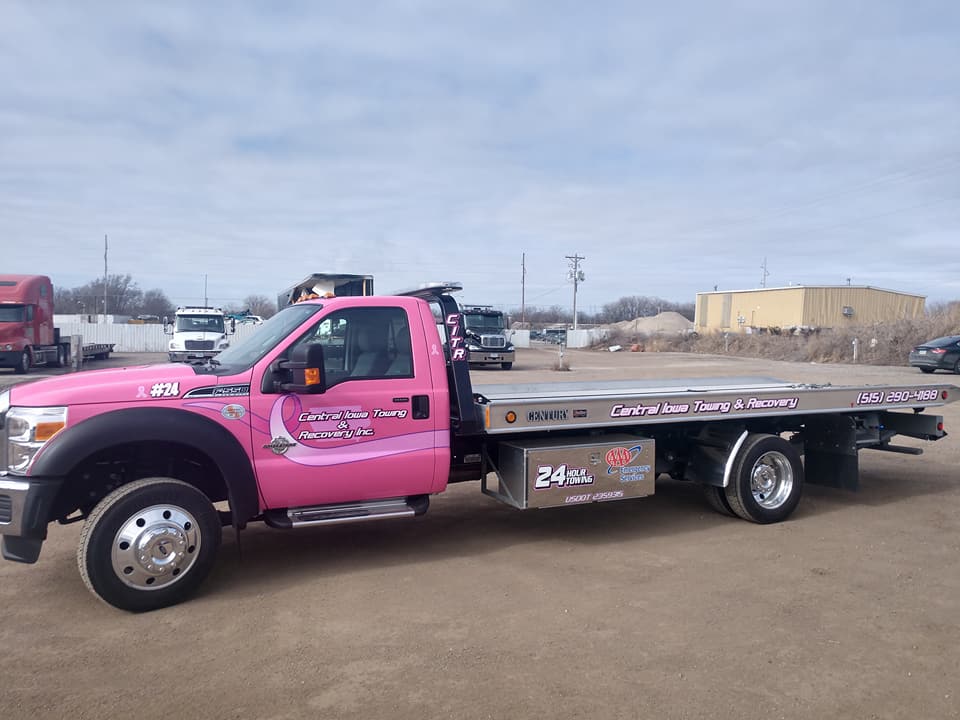
Call Central Iowa Towing & Recovery Now for 24/7 Towing Gilbert IA
Vehicle breakdowns rarely happen at convenient times, and being stranded on the roadside can quickly become stressful. Whether your car has stalled on a Gilbert neighborhood street, along a rural gravel road, or on a highway connecting to Ames, Central Iowa Towing & Recovery is ready to respond. Our experienced operators provide safe, professional towing services backed by local knowledge of Gilbert roads, weather conditions, and traffic patterns. Every call is handled with urgency and attention to safety so drivers can return to the road as quickly as possible. If you need 24/7 towing Gilbert IA, contact Central Iowa Towing & Recovery today at 515-290-4188. Our dispatch team will send the nearest available tow truck and guide you through the process until help arrives.

 L D
L DTrustindex verifies that the original source of the review is Google.
Rob was so helpful and supportive and patient on the phone. Tyrone was so positive and upbeat at 6am on a Saturday. He was quick and responsive to coming out and to my questions and getting me information. Highly recommend them if you need a tow. Nick ShengeliaThank you !!!
 Trystan LagoVery impressed with this company. They did what we asked of them in a timely manner and quoted us a fair price. We recommend.
 Kenne CleghornJosh was quick and super nice, he came and picked up my vehicle and had it delivered in less than 45 minutes. Easy service and highly recommended. Thank you so much!!
 Savannah HontsJosh and the woman on the phone both fantastic!! Very accommodating and helpful, always recommend them!!
 Brandon FredericksenCalled these guys last minute to move 9 scissor lifts. Was a little nervous at first. The guys showed up knew exactly what they were doing got them all transported no issues. Couldn't have been happier with the work. Will definitely continue using them. Great job guys!
 Bob PetersonExcellent service! I have used them multiple times. I decided to use another local company for some foolish reason. I scheduled a week out. The other company canceled the morning of pickup. I then called Central Iowa Towing. They came to the rescue once again… in less than an hour! Never again will I Go elsewhere. You folks are very clutch when people need you. Thank you!!
 Adrianna SaricAlways on top of it and made sure my scheduled tows were there on timeVerified by TrustindexTrustindex verified badge is the Universal Symbol of Trust. Only the greatest companies can get the verified badge who has a review score above 4.5, based on customer reviews over the past 12 months. Read more
FEATURED SERVICES
Mobile Mechanic Services available for Des Moines, Ames, Marshalltown and all of Central Iowa
to help you with your Mobile Car Services, Semi BreakDowns and any other Mobile Mechanical Services you may
need for cars, trucks, semi trucks… etc call our main dispatch number 24/7 for emergency roadside assistance.
Vehicle Lockouts, Gas or Fuel Delivery if you have “Ran out of Gas“, Help With A Tire Change, Mobile Flat Tire Assistance.





“My partner slid off of an exit ramp near Story City. Patrick was out there in 20 minutes and got the car out quickly and expertly out of a drainage ditch. He even followed us up to the local gas station to make sure that the car still drove without any problems. I’m incredibly satisfied with the service — fair price, kind people, and expert service!”
Ames Location
Phone: 515-290-4188
Des Moines Location
Phone: 515-290-4188
Marshalltown Location
Phone: 515-290-4188