Motor Coach Towing Des Moines with Central Iowa Towing
Click to Call
515-290-4188
Des Moines, with its combination of busy highways like I-35 and I-80, suburban corridors such as University Avenue, and bustling downtown streets, sees a fair share of large vehicle traffic—from tour buses to charter motor coaches. This is exactly where professional Des Moines towing services become critical, ensuring heavy and passenger vehicles can be managed safely and efficiently across high-traffic corridors.
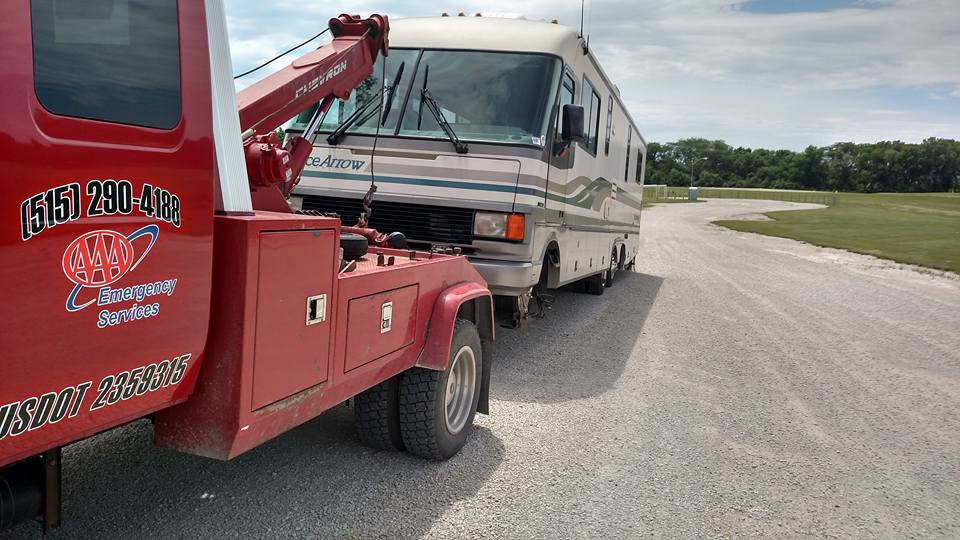
At Central Iowa Towing & Recovery, we recognize that breakdowns involving motor coaches demand specialized expertise, robust equipment, and precise coordination—far beyond standard light-duty towing. This level of response is closely aligned with our work truck towing in Des Moines solutions, where commercial and fleet vehicles require controlled handling during roadside emergencies or operational failures. When a motor coach goes out of service on a weekend concert run or during the Iowa State Fair season, it’s more than an inconvenience—it’s a logistical challenge requiring a top-tier towing partner.
Why Des Moines Drivers Rely on Central Iowa Towing & Recovery for Motor Coach Towing
In Des Moines, motor coaches travel on interstates, state highways, and city streets year-round. When these vehicles break down, the risks multiply:
- Size and Weight: A full motor coach can weigh up to 40,000 lb—requiring high-capacity tow trucks and anchors.
- Passenger Safety: Whether church groups, sports teams, or tour operators, these vehicles often carry 30+ passengers—each entrusted to safe handling.
- Regulatory Complexity: Under Iowa Code, special permitting and weight compliance apply to emergency moves within city limits.
At Central Iowa Towing & Recovery:
- We maintain crane-style rotators and heavy-duty rollback flatbeds rated above 50,000 lb.
- Our team receives specialized training in coach stability, swivel‑axle alignment, and secure anchoring.
- We coordinate with city agencies—especially during events near the Pappajohn Sculpture Park or during Iowa State Fair road closures—to reduce traffic disruption.
What Happens When You Call Central Iowa Towing & Recovery
Once your dispatch comes in, here’s how we handle it:
- Intake & Assessment
- Our dispatcher gathers coach details: make/model, axle configuration, location (e.g., eastbound I‑235 near Merle Hay Rd), and whether passengers remain onboard.
- Meanwhile, they notify you of estimated arrival and safety steps per Iowa law.
- Our dispatcher gathers coach details: make/model, axle configuration, location (e.g., eastbound I‑235 near Merle Hay Rd), and whether passengers remain onboard.
- Unit Assignment & ETA
- We assign the nearest qualified heavy‑duty tow truck, typically from our shop near the River Bend Nature Center, and provide an ETA referencing local roads, like 15 minutes via Fleur Dr.
- You get regular location updates via text or call.
- We assign the nearest qualified heavy‑duty tow truck, typically from our shop near the River Bend Nature Center, and provide an ETA referencing local roads, like 15 minutes via Fleur Dr.
- On‑Site Safety Setup
- Technicians arrive with flares, cones, wheel chocks, and reflective V‑vests.
- The setup follows Iowa’s “Slow Down, Move Over” law, ensuring your motor coach is off the highway shoulder and visible.
- Technicians arrive with flares, cones, wheel chocks, and reflective V‑vests.
- Secure Stabilization & Connection
- Axles are centrally secured using multi-point anchoring systems; front and rear are rigged for balance.
- For ambulance-grade trailers or split-axle coaches, hydraulic jacks and supplemental cranes are used to safely load the coach onto our rollback.
- Axles are centrally secured using multi-point anchoring systems; front and rear are rigged for balance.
- Transport & Handoff
- The coach is smoothly loaded, ensuring no undue stress on tires or suspension.
- We tow to your requested repair facility—often a heavy vehicle bay in West Des Moines or using a flatbed route through E 14th St.
- The coach is smoothly loaded, ensuring no undue stress on tires or suspension.
- Debrief & Documentation
- Before departure, our team provides a recap of the job: time spent, secured points, journey route, and condition report.
- A digital copy is shared for your records.
- Before departure, our team provides a recap of the job: time spent, secured points, journey route, and condition report.
- Intake & Assessment
Our Motor Coach Towing Services in Des Moines
We offer a full suite of services tailored for motor coaches:
- Heavy‑Duty Towing & Recovery
50,000 lb capacity rotators and rollback trucks designed for bus chassis. - Winch-Outs & Off‑Road Recoveries
Especially helpful when a coach veers off the Fleur Drive slope or in rural ditch incidents south of Des Moines. - On-Site Transmissions & Jump Starts
Large-bus jump packs, mobile starter units, and hydraulic lifts available. - Passenger Evacuation Logistics
If evacuation is needed, we deploy shuttle vehicles and coordinate with carriers. - Off-Hour & Event-Specific Coverage
Special support contracts for evening arena games, State Fair logistics, or parade routes down Grand Ave.
Equipment and Safety Measures We Use
Safety is the foundation:
- Heavy-Duty Rotators carry up to 80,000 lb and have articulating booms ideal for pick‑ups/rotations without coach damage.
- Rollback carriers equipped with airbags and hydraulic tilt for smooth loading.
- Hydraulic stabilizers, chocks, and flare kits ensure site safety.
- 882 FM radios keep teams connected across city, highway, and rural terrains.
- All drivers wear DOT-regulated PPE and undergo quarterly highway‑mode training under local‑weather mimicry (ice, rain, wind).
Behind the Scenes: How We Prepare for Motor Coach Calls in Des Moines
Here’s how we stay ahead of the curve:
- Weekly Scenario Drills: Our team trains with live motor coach shells in controlled environments, simulating scenarios like hydraulic brake failure near Fleur Drive, or dual-axle suspension collapse along Army Post Road. These sessions teach our operators to adapt quickly to complex, high-stakes recovery situations.
- Live Traffic Heat Mapping: Using predictive analytics and local DOT feeds, we identify Des Moines’ top 20 congestion and breakdown hotspots—such as I-35 southbound merging near Ankeny or bottlenecks at E Grand Ave—so we can pre-position resources where they’re most likely to be needed.
- Weather‑Specific Response Kits: In winter, our trucks are preloaded with underbody thawing tools, salt spreaders, and de-icing agents for immobilized coaches. During Iowa’s humid summers, we carry backup AC units and hydration supplies to aid stranded passengers waiting for alternate transport.
- Coordination with Event Planners & DOT: For large gatherings—Drake Relays, RAGBRAI pass-throughs, or concerts at Wells Fargo Arena—we work with city officials to stage units nearby, ensuring rapid deployment without jamming downtown corridors.
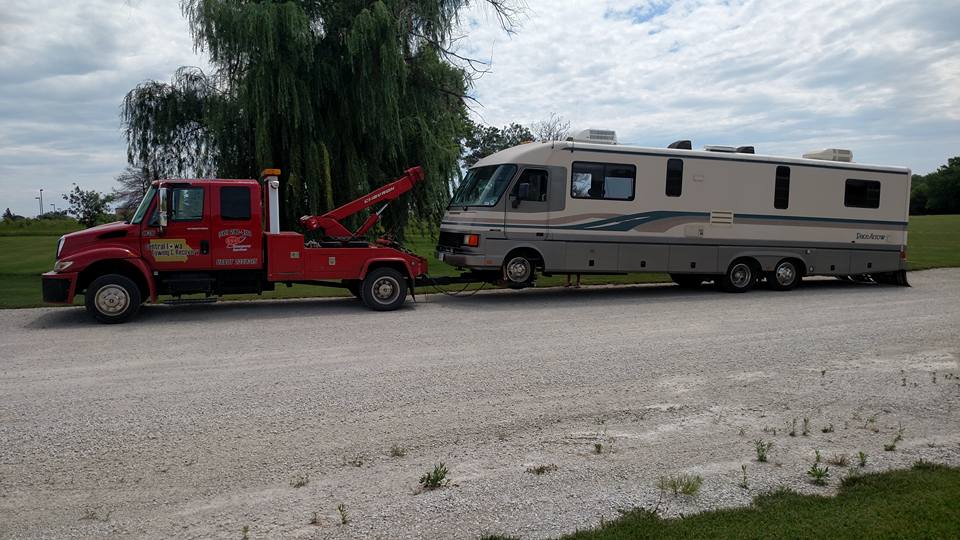
Example: A Des Moines Customer We Helped
In April, a charter motor coach carrying 45 band students from Johnston stalled on I-235 westbound at University Ave—engine failure during morning rush hour. Dr. Peña, the band director, described the scene: “We were inches from oncoming cars. Panic set in.” The coach had 30 minutes of idle time before overheating. Situations like this can quickly escalate, especially when roadside conditions worsen and require mud extraction and recovery in Des Moines as part of a full-service rescue response strategy.
We arrived in 18 minutes via Grand Ave, deployed cones, and unloaded the students into a safe area.
The rotator was used to lift and reload the coach.
We towed it to a heavy-duty bay in Urbandale, working with local shop teams.
The coach made it in time for their afternoon show.
Our Estimated Arrival Times in Des Moines
We understand time is critical:
- Downtown or Connector Highways (I‑235, I‑35/80): typically within 15–20 minutes.
- Suburban Routes (University Ave, Fleur Drive, Merle Hay Rd): around 20–25 minutes.
- Rural Exits (along US‑6 or IA‑5): 25–40 minutes, depending on weather and road conditions.
We optimize dispatch based on traffic modeling and shift patterns—for instance, extra crews deployed during Friday night events at Wells Fargo Arena.
Emergency Tips to Stay Safe While You Wait
- Stay inside the coach unless unsafe; opening doors on busy highways increases risk.
- Activate emergency flashers and PG‑style reflective triangles 200 ft ahead and behind.
- Alert your passengers to step away from the road, behind safety barriers if available.
- Use slow, controlled exits—don’t sprint across traffic.
- Move Off the Shoulder: If Iowa roadway law allows, reroute coach to the nearest ramp or rest stop.
- Gather key documents like coach VIN, insurance plate, trip manifest—this reduces time spent on-site.
- Notify trip managers or chaperones of progress via text or group chat.
- Use official weather‑alert apps during storms. Des Moines flash floods often appear near Creston Avenue or around the Downtown loop in summer.
- Never cross under the coach while it’s suspended; wait for crew clearance.
Local Law Breakdown: “Slow Down, Move Over” in Des Moines
Iowa law mandates vehicles must:
- Slow to at least 20 mph below posted speed limits, or 55 mph max, when passing stationary emergency or towing vehicles—on shoulders or interstates.
- Move over into a non-adjacent lane when safe—and make eye contact with any stranded driver.
Our dispatchers and drivers strictly uphold these laws. We also report any violators to the Iowa DOT agency to maintain scene safety.
Towing Unusual Vehicle Types & Community Support
We also serve unusual needs:
- Hybrid or Battery-Electric Motor Coaches: Uses insulated cables and fire suppression from Iowa Fire Code.
- Lifted or Modified Party Buses: Custom cradle rigging to avoid damage to suspension lifts.
- U-Haul trailers behind motor coaches: We secure double trailer loads with SAS wrap straps.
- E-bike or accessory cargo on coach racks: We inspect racks pre-lift to avoid drop-offs—common around Western Gateway Park events.
- We partner with local community transit to provide alternates when evacuation or rerouting passengers.
Frequently Asked Questions
We provide transparent estimates based on coach size, incident complexity, and distance. After your call-out receipt, we send a detailed invoice showing labor hours, mileage, and equipment used—no surprise fees.
Yes. Our heavy-duty rotators and rollback carriers can safely tow coaches with full passenger counts, following DOT weight distribution regulations. We may ask you to move individuals off-board if imbalance is present.
We never tow through deep water. If flood is under a foot, we use portable pumps and bypass loading zones. For deeper floods, we coordinate with the city to dry or reroute.
Absolutely. During the Iowa State Fair, we station crew rotations near East 30th and University Ave to meet demands inside and around the fairgrounds.
We coordinate with Iowa Northern Railway to secure clearance and schedule access, ensuring safe pulling from the crossing.
Yes—we follow IA DOT protocols, informing passengers of delays, rest stops, and safety over PA systems or crew notifications.
Yes—we carry specialty winches and sandpads to recover buses from unstable terrain before towing them onto the flatbed.Central Iowa leads in Special Vehicle Towing Des Moines. Beyond Rivian Truck Towing Des Moines, we also offer safe transfers with our Transport Towing Des Moines team for dealerships and individuals.
Call Central Iowa Towing & Recovery Now for 24/7 Motor Coach Towing in Des Moines
When a motor coach breaks down—whether on I‑235, University Ave, Grand Avenue, or near Des Moines International Airport—trust Central Iowa Towing & Recovery to respond fast, operate safely, and get your group moving again. With specialized equipment, deep local insight, and commitment to passenger safety, we’re your top choice for Motor Coach Towing Des Moines. Call now for immediate, reliable service—available 24/7, year-round.

 L D
L DTrustindex verifies that the original source of the review is Google.
Rob was so helpful and supportive and patient on the phone. Tyrone was so positive and upbeat at 6am on a Saturday. He was quick and responsive to coming out and to my questions and getting me information. Highly recommend them if you need a tow. Nick ShengeliaThank you !!!
 Trystan LagoVery impressed with this company. They did what we asked of them in a timely manner and quoted us a fair price. We recommend.
 Kenne CleghornJosh was quick and super nice, he came and picked up my vehicle and had it delivered in less than 45 minutes. Easy service and highly recommended. Thank you so much!!
 Savannah HontsJosh and the woman on the phone both fantastic!! Very accommodating and helpful, always recommend them!!
 Brandon FredericksenCalled these guys last minute to move 9 scissor lifts. Was a little nervous at first. The guys showed up knew exactly what they were doing got them all transported no issues. Couldn't have been happier with the work. Will definitely continue using them. Great job guys!
 Bob PetersonExcellent service! I have used them multiple times. I decided to use another local company for some foolish reason. I scheduled a week out. The other company canceled the morning of pickup. I then called Central Iowa Towing. They came to the rescue once again… in less than an hour! Never again will I Go elsewhere. You folks are very clutch when people need you. Thank you!!
 Adrianna SaricAlways on top of it and made sure my scheduled tows were there on timeVerified by TrustindexTrustindex verified badge is the Universal Symbol of Trust. Only the greatest companies can get the verified badge who has a review score above 4.5, based on customer reviews over the past 12 months. Read more
FEATURED SERVICES
Mobile Mechanic Services available for Des Moines, Ames, Marshalltown and all of Central Iowa
to help you with your Mobile Car Services, Semi BreakDowns and any other Mobile Mechanical Services you may
need for cars, trucks, semi trucks… etc call our main dispatch number 24/7 for emergency roadside assistance.
Vehicle Lockouts, Gas or Fuel Delivery if you have “Ran out of Gas“, Help With A Tire Change, Mobile Flat Tire Assistance.





“My partner slid off of an exit ramp near Story City. Patrick was out there in 20 minutes and got the car out quickly and expertly out of a drainage ditch. He even followed us up to the local gas station to make sure that the car still drove without any problems. I’m incredibly satisfied with the service — fair price, kind people, and expert service!”
Ames Location
Phone: 515-290-4188
Des Moines Location
Phone: 515-290-4188
Marshalltown Location
Phone: 515-290-4188